Sep. 09, 2026
Rotary equipment operating in mud, sand, water, dust, and other abrasive environments requires more than a conventional shaft seal. Bearings, gearboxes, axles, track rollers, and drive assemblies must retain their lubricant while preventing external contaminants from entering the housing. A rotary face seal provides this protection through two precision-finished sealing faces that run against each other during operation.
In heavy-duty machinery, this sealing arrangement is commonly called a mechanical face seal, floating seal, floating oil seal, heavy-duty seal, duo-cone seal, or toric seal. Although the names vary, the main purpose remains the same: protecting lubricated rotating components in demanding operating environments.
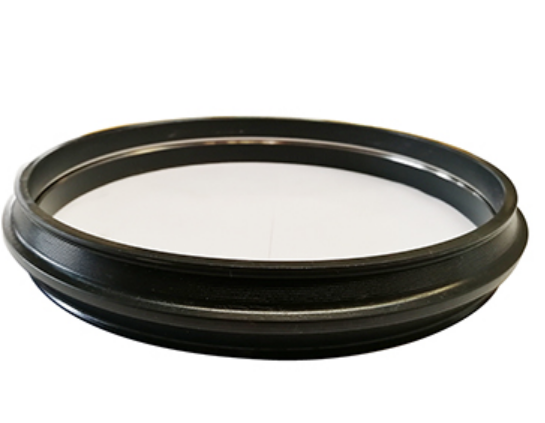
A rotary face seal is a mechanical sealing system in which the primary sealing action takes place between two flat or slightly profiled metal faces positioned perpendicular to the axis of rotation.
A typical heavy-duty mechanical face seal consists of:
◆ Two precision-machined metal sealing rings
◆ Two elastomer rings that support and load the metal rings
◆ Two corresponding housing sections
◆ A lubricated internal cavity containing oil or grease
One metal ring normally rotates with the equipment component, while the mating ring remains stationary in the opposite housing. Their accurately lapped faces stay in contact and slide relative to each other.
This design differs from a radial shaft seal or lip seal. A lip seal contacts the circumference of a rotating shaft, whereas a rotary face seal creates its dynamic sealing interface between two opposing metal faces. The metal rings generally do not seal directly against the shaft.
Heavy-duty rotary face seals are particularly useful where a conventional elastomer lip could be rapidly damaged by abrasive particles, impact, contamination, or long operating cycles.
The metal rings and elastomer elements perform different but closely connected functions.
The two precision-lapped metal faces create the primary dynamic seal. During operation, one face rotates against the other. The smooth, closely matched surfaces restrict lubricant leakage and create a barrier against the entry of mud, dust, water, sand, and other contaminants.
The elastomer rings form the secondary static seal between the metal rings and their housings. They also:
◆ Center the metal rings within the housing
◆ Apply axial force to maintain face contact
◆ Transfer torque between the housing and seal ring
◆ Accommodate limited vibration and misalignment
◆ Compensate for gradual face wear
◆ Help maintain the correct operating position of the seal
Lubrication is essential. A thin oil film between the metal faces helps control friction, temperature, and wear. The lubricant level, viscosity, housing design, operating speed, and face loading must therefore be considered as part of the complete sealing system.
A rotary face seal should not be viewed as an isolated replacement part. Its performance depends on the interaction between the seal rings, elastomers, housing dimensions, lubricant, assembly method, and actual operating conditions.
Several mechanical face seal configurations are available for different housings and equipment designs. They should not be considered interchangeable based only on seal diameter.
The DO type is a widely used floating seal design consisting of two symmetrical metal rings and two toric O-rings.
During installation, each O-ring is compressed between the tapered surface of the metal ring and the corresponding housing. This compression positions the metal ring, provides axial force, and creates the secondary seal.
DO type seals are commonly used in construction machinery, mining equipment, agricultural machinery, and other heavy-duty equipment. A dedicated installation tool is generally recommended to ensure even positioning and prevent the O-ring from twisting.
The DF type uses a diamond-shaped or trapezoidal elastomer instead of a conventional toric O-ring.
This design can require less axial installation space and may allow a simpler housing geometry. It can also be installed without the same dedicated tool normally used for a DO seal. However, the housing and elastomer must still be clean, correctly aligned, and evenly compressed.
DF mechanical face seals are often considered when machinery designers need a compact arrangement or want to reduce housing-machining complexity.
An XY mechanical face seal uses two asymmetric metal rings with complementary X and Y profiles. The two rings work as a matched pair and are supported by elastomer O-rings.
This configuration is normally selected when the original equipment or existing housing was designed specifically for an XY seal. An XY seal should not be replaced with a symmetrical DO or DF design without checking the complete housing geometry.
The YY type is intended for particular housing configurations where available installation space may be limited. It combines precision-lapped metal faces with elastomer loading elements in a relatively compact arrangement.
Selection must be based on the seal profile, housing dimensions, installation envelope, and operating conditions—not simply the nominal inside or outside diameter.
Material selection affects wear resistance, temperature capability, fluid compatibility, and service life.
ZHONO mechanical face seal rings are available in high-chrome alloy cast iron with a published hardness range of 60–72 HRC. The hard metal surface is intended to resist abrasive wear while maintaining the precision-finished sealing interface.
Common elastomer options include:
| Elastomer | Published Temperature Range | General Selection Consideration |
|---|---|---|
| NBR | -35°C to 100°C | General industrial and heavy-equipment applications |
| HNBR | -30°C to 150°C | Higher-temperature operating conditions |
| VMQ | -50°C to 200°C | Applications requiring a wide temperature range |
| FKM | -10°C to 180°C | Higher temperatures and demanding fluid environments |
Temperature range alone should not determine elastomer selection. Buyers must also consider the lubricant, hydraulic fluid, cleaning chemicals, environmental exposure, storage conditions, and length of the operating cycle.
Heavy-duty rotary face seals are typically applied to slow- and moderate-speed rotating systems exposed to abrasive contamination.
Excavators, bulldozers, loaders, and other construction machines operate continuously around soil, mud, gravel, and water. Mechanical face seals can be installed in:
◆ Track rollers
◆ Idlers
◆ Final drives
◆ Axles
◆ Wheel hubs
◆ Gear housings
◆ Undercarriage assemblies
The seal helps retain oil or grease while protecting bearings and gears from external contamination.
Mining machinery may encounter mineral dust, slurry, impact, vibration, and abrasive debris. Typical sealing positions include:
◆ Mining vehicle drive assemblies
◆ Conveyor systems
◆ Transmission units
◆ Coal-mining machinery
◆ Scraper conveyors
◆ Gearboxes and axles
In these applications, contaminant exclusion is often as important as preventing lubricant leakage.
Tractors, rotary cultivators, harvesters, and soil-working equipment operate around dust, crop residue, moisture, and abrasive soil. Floating seals are used to protect bearings and drivetrain components where ordinary shaft seals may experience rapid wear.
Rotary face seals can also be found in tunnel-boring machinery, heavy conveyors, mixers, stirrers, and similar rotating systems where long maintenance intervals and reliable lubricant retention are required.
Other kinds of rotary face seals are used in pumps and process equipment, but the heavy-duty metal face seal discussed here is primarily designed for contaminated machinery environments rather than being a universal solution for every high-pressure or high-temperature process.
Selecting a replacement seal or specifying one for new equipment requires more than matching a part number.
Important information includes:
1. Seal dimensions: Confirm the inner diameter, outer diameter, overall height, and all relevant housing dimensions.
2. Seal configuration: Determine whether the equipment requires a DO, DF, XY, YY, or another specific profile.
3. Housing geometry: Check the groove angle, seating surfaces, axial installation space, and required compression.
4. Operating speed: Excessive rotational or linear speed can increase friction and heat at the sealing faces.
5. Internal pressure: Pressure beyond the seal’s design limit may displace the metal rings or elastomer elements.
6. Operating temperature: Consider both continuous and peak temperatures when choosing the elastomer.
7. Lubricant: Identify the oil or grease type and verify its compatibility with the selected elastomer.
8. External contamination: Describe whether the equipment encounters dust, sand, mud, water, slurry, chemicals, or mineral particles.
9. Equipment movement: Vibration, axial movement, shaft eccentricity, and misalignment may influence the required design.
For replacement projects, the original seal number, equipment model, photographs, existing seal dimensions, and housing drawing can help prevent an incorrect match.
Even a correctly specified rotary face seal can fail prematurely if it is damaged or contaminated during installation.
Before assembly, the installer should clean the housing grooves and remove dirt, metal particles, old lubricant, corrosion, and burrs. The elastomer rings must be correctly positioned without twisting or uneven compression.
The precision-lapped metal faces should be protected from scratches, impact, fingerprints, and abrasive particles. Both seal halves must be installed squarely and evenly in their respective housings.
Oil or grease should not be applied to a DO-type O-ring merely to make installation easier, because uncontrolled lubrication can allow the ring to slip or become incorrectly positioned. The installation procedure specified by the seal manufacturer should always be followed.
After the seal halves are properly seated, the working metal faces are cleaned and prepared with the specified lubricating film. The equipment should then be checked for correct installation gap, alignment, lubricant level, and free movement before being placed into service.
Premature failure is not always caused by the seal material itself. Common contributing factors include:
◆ Incorrect seal or housing geometry
◆ Twisted or unevenly compressed elastomer rings
◆ Contamination trapped between the sealing faces
◆ Scratched or damaged lapped surfaces
◆ Insufficient lubrication
◆ Excessive operating speed or internal pressure
◆ Incorrect elastomer and fluid combination
◆ Housing damage, burrs, or dimensional errors
◆ Improper storage before installation
◆ Reusing components that should be replaced as a matched set
Leakage, abnormal temperature, contaminated lubricant, unusual noise, or rapid lubricant loss should be investigated before the equipment continues operating.
For industrial buyers, dimensional inspection alone is not sufficient. The consistency of a rotary face seal also depends on metal composition, hardness, heat treatment, surface finish, flatness, elastomer properties, and dynamic sealing performance.
Useful quality-control methods include:
◆ Spectrometer analysis of metal composition
◆ Rockwell hardness testing
◆ Metallographic examination
◆ Dimensional inspection
◆ Sealing-face inspection
◆ Dynamic lifetime and leakage testing
These checks are especially important for OEM programs and repeat orders where seals from different production batches must fit the same housings and provide consistent performance.
A rotary face seal is a complete heavy-duty sealing system rather than simply a ring attached to a shaft or gearbox. Its two precision-lapped metal faces retain lubricant and block external contamination, while its elastomer elements position, load, and seal the metal rings within the housing.
Successful application depends on selecting the correct seal profile, dimensions, metal and elastomer materials, operating limits, and installation method. Buyers should evaluate the equipment environment as a whole, including speed, pressure, temperature, lubricant, contamination, and housing geometry.
ZHONO manufactures DO, DF, XY, and YY mechanical face seals for construction, mining, agricultural, and other heavy-duty rotating equipment. When an existing seal number is unavailable, equipment information, measured dimensions, operating conditions, or a housing drawing can be used to assess the appropriate configuration.
NAVIGATION
Tel.: 010-80382045
E-mail: sales@bjzhongnuo.com
Wechat: +86 175 0108 8188
WhatsApp: +8615831560503
Add.: No. A48,TiantanDongli,Dongcheng District,Beijing,100061,China
Request a Quote