Oct. 14, 2026
Track rollers are essential components of an excavator's undercarriage. They support the machine's weight, guide the track chain, and help distribute loads as the excavator moves across different types of terrain. Because they operate continuously under heavy loads and are exposed to mud, sand, water, and abrasive debris, their sealing systems experience considerable wear over time.
One common undercarriage problem is track roller seal failure. When a seal loses its ability to retain lubricant and prevent contaminants from entering the roller assembly, internal components may experience accelerated wear, increased friction, and eventually bearing damage.
An excavator track roller seal is therefore important not only for preventing oil leakage but also for protecting the internal bearing and rotating surfaces. Understanding the early symptoms, common causes, and replacement signs helps explain how seal deterioration develops and why it should not be ignored.
This article examines the main failure mechanisms and their effects on track roller performance.
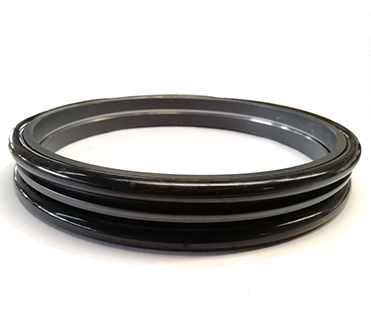
A track roller typically contains an internal bearing or bushing arrangement that allows the roller shell to rotate around its supporting shaft. Lubricant inside the assembly reduces friction between moving components and helps control operating temperature.
To retain this lubricant and prevent external contamination, many heavy-duty excavator track rollers use a floating seal, also known as a mechanical face seal or Duo-Cone seal.
A typical floating seal consists of two precision-machined metal rings and two elastomer O-rings.
The sealing system works through several coordinated functions:
◆ Metal sealing rings: Two matching metal rings are installed face-to-face. Their accurately finished contact surfaces form the primary dynamic sealing interface.
◆ Elastomer O-rings: The rubber rings support and center the metal rings within their respective housings. They also provide the elastic force needed to maintain contact between the metal faces.
◆ Lubricant retention: The contacting metal faces help prevent internal oil or grease from escaping during rotation.
◆ Contamination exclusion: The sealing interface helps prevent mud, sand, dust, and water from entering the internal bearing chamber.
During operation, one metal ring rotates with the roller shell while the other remains stationary with the supporting structure. Their lapped faces maintain a controlled contact relationship, creating a sealing barrier between the lubricated interior and the external environment.
This design is particularly useful in tracked construction machinery because conventional rubber lip seals can experience rapid wear when exposed to abrasive particles.
For more information about this sealing structure, see ZHONO's DO Type Mechanical Face Seal, which is designed for heavy-duty rotating equipment, including excavator track rollers.
Seal deterioration does not always cause immediate roller failure. In many cases, the sealing system gradually loses its ability to maintain proper lubrication and contamination protection.
Recognizing the following symptoms helps identify potential problems before they develop into more serious undercarriage damage.
A track roller oil leak is one of the most recognizable signs of a possible sealing problem.
When the floating seal can no longer maintain sufficient contact between its metal sealing faces, lubricant may escape through the sealing gap.
The leakage can develop through several stages:
◆ Early stage: A thin oil trace appears around the sealing area.
◆ Developing stage: The roller surface remains wet, and fresh lubricant repeatedly appears after cleaning.
◆ Advanced stage: Visible oil drops form around the roller, sometimes leaving oily marks on the track shoes or ground.
However, a small oil trace does not automatically indicate seal failure. Some floating seal designs require a thin lubricating film between the metal contact faces. Minor oil sweating can therefore occur during normal operation.
The important distinction is whether the oil trace remains slight and stabilizes or develops into persistent wetness and active dripping.
Cleaning the affected area and checking it again after operation can help distinguish temporary oil traces from continuing leakage.
A floating seal performs two functions simultaneously: retaining lubricant and preventing external contaminants from entering the roller.
When the sealing interface becomes damaged, the second function can also deteriorate.
Fine sand, soil particles, and muddy water may gradually enter the internal chamber. Once contamination reaches the bearing area, it can mix with the lubricant and create an abrasive environment.
During internal inspection, contaminated lubricant may appear cloudy, discolored, or contain visible particles. Corrosion marks and abrasive scoring may also appear on internal components.
This type of contamination is particularly damaging because it creates a cycle of accelerated wear. Abrasive particles damage the bearing and sealing surfaces, while further deterioration makes it easier for additional contaminants to enter.
A damaged seal may allow lubricant to escape, reducing the amount available to protect the internal rotating components.
As lubrication becomes insufficient, friction increases between the bearing surfaces and other moving parts.
Several symptoms may follow:
◆ Grinding or rumbling noises from the roller area.
◆ Unusual squealing during track movement.
◆ A track roller that becomes noticeably hotter than neighboring rollers.
◆ Increased resistance when the roller rotates.
These symptoms do not exclusively indicate seal failure. Bearing wear, internal mechanical damage, and other undercarriage problems can produce similar effects.
However, when abnormal temperature or noise occurs together with oil leakage, the possibility of internal lubrication failure becomes more significant.
As internal bearing components deteriorate, the roller may no longer rotate smoothly.
In more advanced cases, the roller can develop excessive resistance, intermittent rotation, or complete seizure.
A seized roller stops rotating while the track chain continues moving over its outer surface. This creates sliding friction instead of normal rolling contact.
Over time, the roller shell may develop flat spots, grooves, or uneven wear patterns. The machine may also experience abnormal vibration or changes in track movement.
At this stage, the problem has progressed beyond an isolated sealing issue and may involve substantial internal mechanical damage.
Understanding the causes of excavator track roller seal deterioration requires looking at both the sealing components and their operating environment.
Several factors can contribute to premature failure.
Floating seals operate through continuous contact between two precision-finished metal faces.
Although these surfaces are designed to withstand demanding operating conditions, they are not immune to long-term wear.
As the sealing faces operate against each other, their contact area gradually changes. Abrasive particles and continuous sliding contact contribute to material loss over time.
Eventually, the effective sealing surface may approach the end of its available wear allowance. When the contact geometry can no longer maintain reliable sealing, lubricant retention and contamination protection deteriorate.
This is a natural wear mechanism, especially in equipment operating for extended periods in abrasive environments.
Mud, sand, and fine mineral particles are among the major external threats to floating seals.
Contamination can accumulate around the seal housing, particularly in the spaces between the metal rings, elastomer elements, and mounting grooves.
When fine particles become packed into these areas, they can interfere with the movement and positioning of the sealing components.
This may increase the pressure acting on the metal contact faces, accelerating frictional wear.
Komatsu's technical research on floating seals also identifies packed silt and sand as a mechanism that increases sealing-face pressure and shortens seal service life.
Continuous exposure to abrasive materials can therefore cause premature wear even when the original seal design is suitable for heavy-duty applications.
The condition of the metal contact surfaces directly affects sealing performance.
Deep scratches, chipped edges, cracks, corrosion marks, and uneven wear can prevent the two rings from maintaining proper contact.
Such damage may result from abrasive contamination, impact, excessive friction, corrosion, or improper handling during maintenance.
For example, if a metal ring is dropped or its precision sealing face comes into contact with a hard object, the resulting surface damage may compromise the sealing interface.
Once the mating surfaces cannot maintain their intended contact, oil leakage and contaminant ingress become more likely.
Although the metal rings form the primary dynamic sealing interface, the elastomer O-rings are equally important to the overall sealing system.
They provide support, positioning, and the elastic force needed to maintain contact between the metal faces.
Over time, rubber components may experience:
◆ Loss of elasticity due to aging.
◆ Permanent deformation or compression.
◆ Cracking or surface deterioration.
◆ Twisting or displacement within the housing.
◆ Damage caused by unsuitable operating temperatures or lubricant compatibility.
If an O-ring loses its ability to maintain the required compression, the metal sealing rings may become misaligned or lose sufficient contact pressure.
Consequently, even metal rings with relatively good surface conditions may no longer provide reliable sealing.
Installation conditions can significantly affect floating seal performance.
Contamination inside the housing groove, burrs on mounting surfaces, uneven seating, or twisted O-rings can prevent the sealing components from reaching their intended position.
Incorrect installation may also create uneven pressure between the two metal rings, resulting in abnormal friction and premature wear.
Excessive internal pressure can be another contributing factor. Depending on the seal design, abnormal pressure may disturb the positioning of the metal rings or elastomer elements.
Housing deformation or damaged mounting grooves can create similar problems because the sealing rings depend on accurate positioning and support.
ZHONO provides additional technical information in its Floating Seal Installation Guide and Tools, including housing cleanliness, O-ring positioning, and installation alignment.
The consequences of track roller seal failure extend beyond the sealing components themselves.
A damaged seal can initiate a chain reaction involving lubrication loss, contamination, bearing deterioration, and abnormal mechanical loading.
Reduced internal lubrication
As lubricant escapes, the bearing and rotating surfaces receive less protection. Friction increases, and the internal components become more vulnerable to wear and overheating.
Accelerated bearing deterioration
If sand, water, or other contaminants enter the roller, they can damage bearing surfaces and accelerate internal wear. Contaminated lubricant also loses its ability to provide effective protection.
Roller seizure
Severe lubrication loss or bearing damage may eventually prevent the roller from rotating normally. A seized roller creates sliding contact between the stationary roller shell and the moving track chain.
Secondary undercarriage damage
Abnormal roller rotation and uneven contact can increase wear on track links, track shoes, and neighboring undercarriage components. Prolonged operation may also contribute to vibration and irregular track movement.
For this reason, a relatively small sealing problem can eventually develop into a much larger undercarriage maintenance issue.
Replacement timing depends on the actual condition of the sealing components and the internal roller assembly rather than simply the presence of an oil stain.
Several conditions indicate that replacement or professional repair is necessary.
Persistent and progressive oil leakage
When the roller remains continuously wet, develops visible oil drops, or repeatedly leaks fresh lubricant after cleaning, the sealing system should be inspected. Confirmed active leakage requires repair rather than indefinite monitoring.
Visible damage to metal sealing rings
Cracks, chips, severe scoring, corrosion, or sealing surfaces worn beyond their allowable limits indicate that the affected rings can no longer provide dependable sealing.
Damaged or deformed O-rings
Rubber rings that have lost elasticity, developed cracks, become twisted, or suffered permanent deformation should not be expected to maintain their original sealing function.
Evidence of internal contamination or bearing damage
Water, abrasive particles, abnormal internal wear, and damaged bearing surfaces indicate that the problem may extend beyond the floating seal itself.
If the roller has already developed rough rotation, excessive heat, grinding noise, or seizure, replacing only the seal may not restore normal operation.
In these situations, the internal components, mounting surfaces, and roller housing must also be evaluated. Depending on the extent of damage and the equipment manufacturer's service procedure, rebuilding or replacing the complete roller assembly may be necessary.
Importantly, minor oil sweating without progressive leakage or other abnormal symptoms should not automatically trigger seal replacement. The condition should be assessed according to the specific roller design and its manufacturer's maintenance recommendations.
No. Oil can also escape from the filling plug or an O-ring between the roller and its supporting bracket. In addition, some floating seal designs produce minor oil traces during normal operation. The location, persistence, and amount of lubricant are important when identifying the actual problem.
A minor oil trace does not necessarily mean immediate failure. However, confirmed continuous leakage can reduce internal lubrication and allow contaminants to enter. If the roller also develops abnormal heat, noise, or rough rotation, continued operation can accelerate internal damage.
Progressive seal deterioration can lead to lubricant loss, abrasive contamination, bearing wear, and eventually roller seizure. A seized roller may also cause secondary damage to the track chain and other undercarriage components.
There is no universal service life for every excavator track roller seal. Actual durability depends on seal design, material, operating hours, contamination levels, working loads, installation quality, and maintenance conditions. Equipment operating in abrasive soil, muddy environments, or severe-duty applications may experience faster seal deterioration.
Track roller seal failure is not simply an oil leakage problem. It involves the gradual deterioration of a sealing system responsible for retaining lubricant and protecting internal components against abrasive contamination.
Persistent oil leakage, mud and water ingress, unusual operating temperatures, abnormal noise, and uneven roller rotation are important warning signs. Common causes include normal sealing-face wear, packed abrasive debris, damaged metal contact surfaces, deteriorated O-rings, and improper installation.
Identifying the actual failure mechanism is essential because replacing a damaged seal without addressing internal bearing wear, housing damage, or abnormal operating conditions may lead to repeated problems.
Regular undercarriage inspection and proper sealing-system maintenance help preserve track roller performance and reduce the risk of more extensive mechanical damage.
NAVIGATION
Tel.: 010-80382045
E-mail: sales@bjzhongnuo.com
Wechat: +86 175 0108 8188
WhatsApp: +8615831560503
Add.: No. A48,TiantanDongli,Dongcheng District,Beijing,100061,China
Request a Quote